Phlebologist – who are they and what do they do?
When is it recommended to schedule a phlebology consultation regarding veins?
CONTEMPORARY PHLEBOLOGIST
The Origin and Meaning of the Term "Phlebologist"
The term phlebologist comes directly from Greek: "phlebos” (φλέψ), which means vein and the wordlogos”, meaning study. It can, therefore, be defined as the science of veins. Phlebologists are routinely involved in the prevention, diagnosis, and treatment of all disorders of the venous system. Phlebology is currently a dynamically developing field of medicine that has undergone a true revolution in the last two decades thanks to advances in diagnostic imaging and modern, minimally invasive treatment methods.
In Poland, phlebology does not yet exist as a separate medical specialization in the context of the Act on the Profession of Physician. Currently, phlebologists are defined as physicians who hold core specializations, such as general surgery, vascular surgery, radiology and diagnostic imaging, internal diseases, or interventional radiology, and have subsequently deepened their knowledge and skills in the field of venous diseases. Since 1991, Polish Society of Phlebology has been operating in Poland,, which brings together specialist physicians involved in this field.
THE PHLEBOLOGIST AND THEIR CONTEMPORARY CHALLENGES
Does a phlebologist only treat varicose veins in the legs?
"Treatment of varicose veins in the legs" is one of the most frequently overused terms associated with veins. We must remember that treating varicose veins, which is merely a symptom of Chronic Venous Disease (CVD), is distinct from managing the underlying CVD. A modern phlebologist (i.e., a specialist in venous diseases) addresses the entire venous system—from the cerebral veins, through the abdominal and pelvic veins, to the vessels of the lower extremities. Lower extremity venous disease—which manifests as varicose veins in the lower extremities (the most common form of venous disease)—very often originates in the abdominal and pelvic veins before subsequently progressing to the lower extremities.
Did you know ?
Modern phlebology is an interdisciplinary field that requires broad knowledge from the specialist physician. This includes, in particular, knowledge of systemic diseases, diagnostic imaging, and minimally invasive interventional techniques, which have come to dominate the treatment of venous diseases. A modern phlebologist must simultaneously be an internist, a diagnostic specialist (or sonographer), and a vascular surgeon.
According to epidemiological data, up to 40% of the adult population in Poland suffers from various forms of venous insufficiency. Contemporary scientific and population studies show that Chronic Venous Insufficiency (CVI) affects a significantly larger percentage of the population than previously assumed. Research conducted by the Phlebology Clinic team in Warsaw indicates that in many patients (especially women after pregnancies), the cause of varicose veins in the intimate areas and venous changes in the legs lies higher up – in the abdomen and pelvis (read more about pelvic venous insufficiency).).
PHLEBOLOGY CONSULTATION
What a professional phlebology consultation looks like
Phlebology consultation At the Phlebology Clinic, it is more than just a typical conversation and a simple examination of leg veins. During the phlebology consultation, a specialist phlebologist conducts a detailed medical history, taking into account pregnancy history, hormonal medication use, lifestyle (including resistance/strength training), and family predisposition. Subsequently, they perform a physical examination and a comprehensive ultrasound examination – Doppler Ultrasound of the Venous Systemevaluating the veins of the lower extremities, pelvis, and abdominal cavity. A key element of phlebological diagnostics is the assessment of veins in standing, semi-sitting, and lying positions. Only an examination performed in this manner authorizes the specialist to establish a preliminary diagnosis, plan treatment, or refer the Patient for so-called extended diagnostics.
Did you know ?
The venous system, unlike the arterial system, is characterized by enormous anatomical variability. The pattern of veins in every Patient is almost like a fingerprint—unique and requiring an individualized approach. Therefore, the diagnostics of the venous system must cover not only the lower extremities but also the abdominal cavity and the pelvis. The entire path of venous blood outflow.
At the Phlebology Clinic in Warsaw, the standard involves a comprehensive assessment of the entire venous system using advanced imaging techniques. Depending on the needs, diagnostics may include: conventional Doppler ultrasound of the veins, Intravascular Ultrasound (IVUS), Computed Tomography Venography (CTV), Magnetic Resonance Venography (MRV), or low-dose Digital Subtraction Venography (DSV). This versatile diagnostics allows for precise identification of the problem's source and planning of effective causal treatment.
IS IT TIME TO TREAT YOUR VARICOSE VEINS? IT’S AN IMPORTANT DECISION.
PHLEBOLOGIST (WARSAW) – WHY CHOOSE A VERIFIED VEIN SPECIALIST?
As a phlebologist with many years of experience, I would like to emphasize the fundamental importance of choosing the right specialist for the treatment of venous diseases. Choosing an experienced phlebologist is an investment in the effective and lasting treatment of varicose veins., which may determine your health for many years to come.
Clinical data leaves no doubt – with a traditional, schematic approach to the treatment of varicose veins recurrences of venous disease occur in up to 50% of patients within the first 5 years post-procedure.Why does this happen? The main reason is the lack of comprehensive diagnostics and the failure to eliminate the actual sources of the problem. Only symptomatic treatment is applied, and the true causes of venous insufficiency are overlooked.
It should be remembered that venous disease is usually multifactorial – several elements overlap, mutually intensifying each other. The most important contemporary risk factors include: Number of pregnancies and births (leading to pelvic venous insufficiency) unfavorable anatomical predispositions (individual structure of the venous system predisposing to the development of venous insufficiency) and intense strength training (excessive loads during strength sports pathologically increase intra-abdominal pressure (IAP), leading to impaired venous outflow)
The contemporary phlebologist specializing in a modern and causal approach to vein treatment should possess a full spectrum of tools, both diagnostic and therapeutic. Ideally, a patient should be able to undergo comprehensive diagnostics and receive a personalized treatment plan tailored to their life situation and clinical status in one place
Did you know ?
The treatment of varicose veins, which is the primary symptom of venous insufficiency, should be a process precisely planned based on an accurate hemodynamic map of the venous system. At the Phlebology Clinic in Warsaw, we apply a descending treatment strategy – starting from insufficient veins in the abdomen and pelvis, through the structures of the pelvic floor, perineum, and vulva, down to the insufficient veins in the legs and the resulting varicose veins formed by this mechanism. This approach significantly increases long-term efficacy and reduces the risk of recurrence
PROPRIETARY METHODS SUPPORTED BY YEARS OF EXPERIENCE
PHLEBOLOGY CLINIC IN WARSAW – WHAT MAKES US UNIQUE?
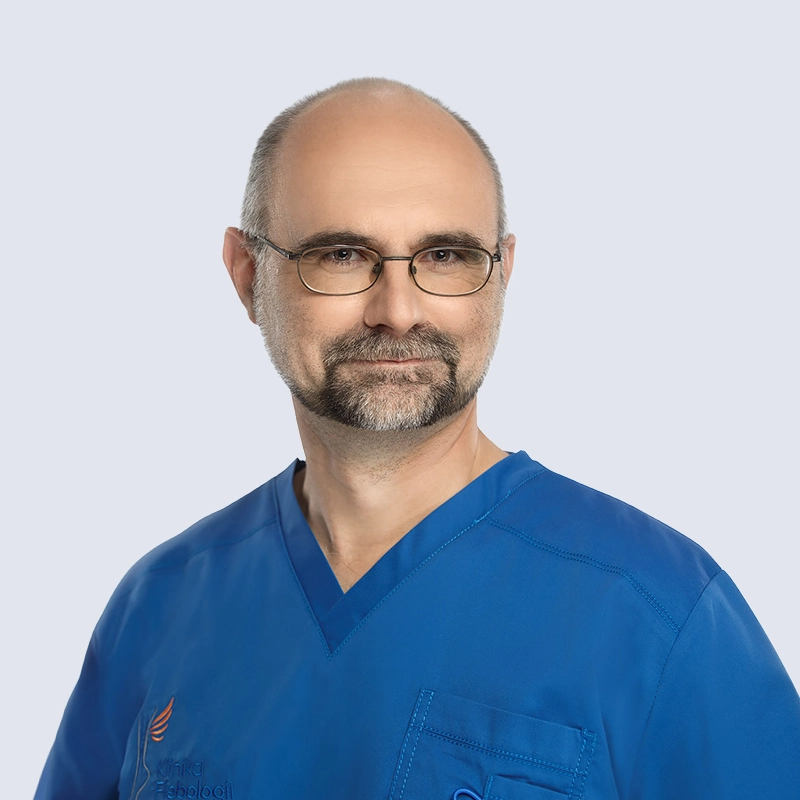
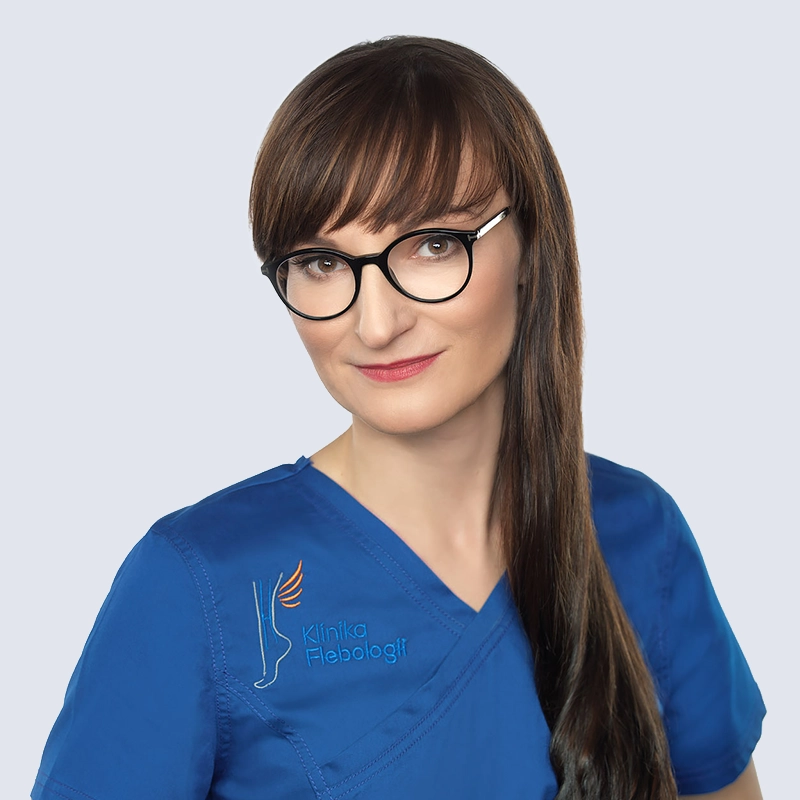
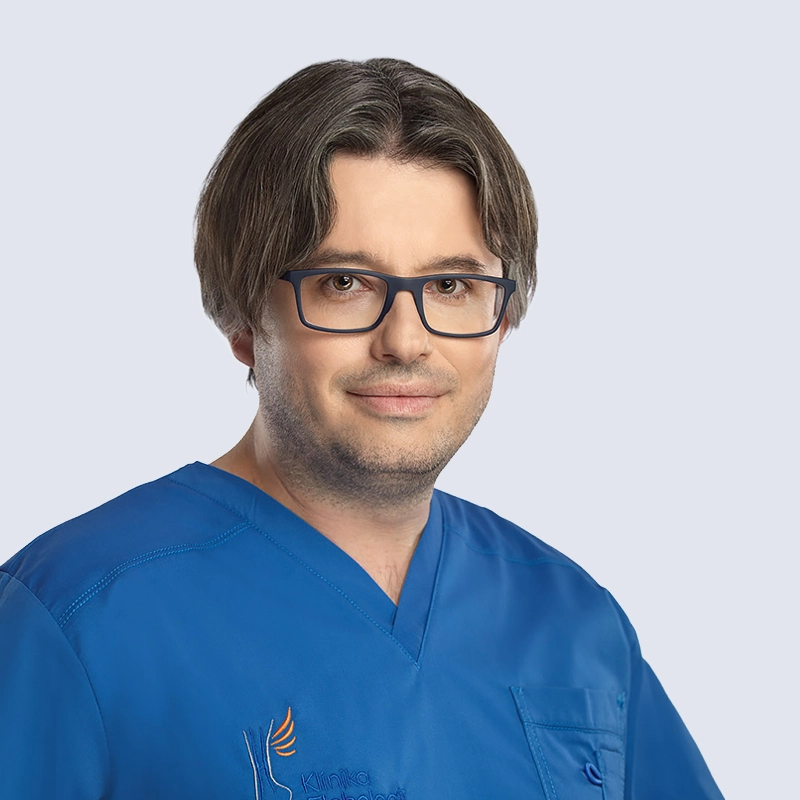
The Phlebology Clinic in Warsaw it is a specialist medical facility established over 10 years ago by three phlebology physicians (or phlebologists): Cezary Szary, MD, PhD, Tomasz Grzela, MD, DSc (or MD, PhD, DSc) and Justyna Wilczko-Kucharska, MD, PhD. It is not only a medical center, but above all, a place where the mission of implementing innovative diagnostic and therapeutic technologies has been combined with broadly understood patient education and the training of physicians from all over Poland.
The Phlebology Clinic Team consists of physicians specializing in various medical fields: radiology and diagnostic imaging, general and vascular surgery, proctology, surgical oncology, and internal medicine. Such an interdisciplinary team composition allows for a holistic approach to the patient and their health problem. We are supported by highly qualified nurses and experienced administrative staff. Together, we ensure the comfort of our patients at every stage of treatment.
What characterizes our Clinic? Above all, many years of experience in the advanced diagnosis and treatment of rare and challenging cases of venous disease. The Phlebology Clinic is a pioneer and leader in the so-called causal treatment in Poland.
IN SEARCH OF THE SOURCE OF THE PROBLEM
THE PHILOSOPHY OF CAUSAL TREATMENT OF VENOUS INSUFFICIENCY
Phlebologists from the Phlebology Clinic in Warsaw have developed and implemented a nationally and globally unique approach to the treatment of venous diseases, based on three pillars: comprehensive diagnostics of the entire venous system, identification of the primary source of reflux, and sequential elimination of causes in the correct hemodynamic order. This philosophy is called causal treatment and presents an alternative to the traditional approach focused solely on the removal of visible varicose veins.
Did you know ?
Varicose veins are not a disease in themselves, but a symptom of venous system overload. They are the body's natural defense mechanism. They act as reservoirs or an alternative drainage pathway (collateral circulation). They develop when the main venous trunks are insufficient or when blood outflow through them is blocked (e.g., due to previous venous thrombosis). Therefore, simply removing a varix (or varicose veins) without finding and eliminating the cause of its formation provides only a cosmetic effect and leads to the formation of new venous enlargements, often in different locations.
Scientific studies by the Phlebology Clinic team, published in renowned medical journals indexed in PubMed, confirm the effectiveness of this approach. In the 2021 publication titled „The Analysis of Selected Morphological and Hemodynamic Parameters of the Venous System and Their Presumable Impact on the Risk of Recurrence after Varicose Vein Treatment” the team of Dr. Szary, Dr. Wilczko-Kucharska, and Dr. Grzela demonstrated that in a significant percentage of patients, the cause of lower limb varicose veins lies higher up and stems from pelvic venous insufficiency.
Another groundbreaking publication from 2021 titled „Hemodynamic and Radiological Classification of Ovarian Veins System Insufficiency” presents a proprietary, 4-stage classification of ovarian vein insufficiency, which aids in the precise planning of treatment. Based on studies conducted between 2017 and 2019 on a group of 535 female patients admitted to the Phlebology Clinic with symptoms of lower limb venous insufficiency, the team developed a hemodynamic and radiological classification system that is currently utilized by phlebologists worldwide.
DO NOT WAIT UNTIL VARICOSE VEINS APPEAR...
When is it recommended to schedule a phlebology consultation?
Many people postpone a visit to a phlebologist for too long, trivializing the first symptoms of venous disease. They think, 'it will somehow work itself out.' This is a mistake, as early detection of the problem significantly increases treatment effectiveness and helps to avoid serious complications such as deep vein thrombosis (DVT), pulmonary embolism (PE), or venous leg ulcers. According to the latest data, approximately 2% of Polish society suffers from leg ulcers. Among people over 65 years of age, chronic leg ulcers affect up to 6% of the population, with the problem more often concerning women.
It is advisable to consult a phlebologist when symptoms such as: a feeling of heavy legs worsening in the evening, lower limb swelling (especially increasing throughout the day), visible dilated veins or spider veins (telangiectasias), nocturnal calf cramps, itching of the skin on the lower legs, skin discoloration around the ankles, or leg pain after prolonged standing or sitting, appear. In women, additional warning signs may include: painful and prolonged menstruation, a feeling of leg heaviness that intensifies during menstruation, pain during intercourse (dyspareunia), burning in the intimate areas, or visible varicose veins in the vulvar region.
TREATMENT SAFETY AND INCREASED EFFECTIVENESS
OPTIMIZATION OF MINIMALLY INVASIVE METHODS IN THE TREATMENT OF VENOUS INSUFFICIENCY
Contemporary phlebology primarily utilizes minimally invasive techniques, which have replaced traditional surgical vein stripping. The Phlebology Clinic in Warsaw employs the full spectrum of modern treatment methods, tailoring the set of procedural techniques to the situation of each individual patient.
Studies by the Phlebology Clinic team, published in Journal of Clinical Medicine in 2021, confirm the high efficacy and safety of these methods. In the publication titled „Two-Year Follow-Up after Endovenous Closure with Short-Chain Cyanoacrylate versus Laser Ablation in Venous Insufficiency” compared the results of a two-year follow-up period in 89 patients treated with cyanoacrylate adhesive or endovenous laser (the ELVeS 1470 nm system), demonstrating comparable efficacy of both methods with a very low complication rate.
An essential element of contemporary phlebology is the treatment of pelvic venous insufficiency – a problem that was overlooked in standard diagnostics for years. It is precisely thanks to the physicians of the Phlebology Clinic that this topic is being addressed in Poland by an increasingly wide range of phlebologists and physiotherapy specialists.
SUMMARY
TODAY'S PHLEBOLOGIST IS A SPECIALIST WHO VIEWS VEINS COMPREHENSIVELY
Phlebologist is a vein specialist physicia, who deals with a much broader range of venous system health problems than just varicose veins visible on the legs. Contemporary phlebology is an interdisciplinary field requiring the physician to have in-depth knowledge of the anatomy and hemodynamics (hydraulics) of the venous system, skills in Doppler ultrasonography and imaging, as well as proficiency in performing minimally invasive procedures.
When choosing phlebologist in Warsaw, it is worth paying attention to the physician's experience, the range of diagnostic and therapeutic methods offered, demonstrable scientific achievements, and the philosophy of treatment. The Phlebology Clinic is a facility with many years of experience, possessing the most modern diagnostic equipment and the full spectrum of therapeutic methods. Thanks to the causal approach, based on reliable scientific research published in renowned medical journals, patients can expect an effective and lasting improvement in health.
Do not wait for symptoms to worsen. Often, early intervention correcting venous insufficiency is the key to success in treating venous disease. Schedule a phlebological consultation and take care of your venous system health today.
Author:
Cezary Szary, MD, PhD
Phlebologist, specialist in radiology and diagnostic imaging
Expert in the diagnosis and treatment of pelvic venous insufficiency at the Phlebology Clinic.

 Polish
  English